




How to Maximize Production Line Value? — Balancing Efficiency and Long-Term Costs for Polymer Waterproofing Membrane Production Lines While Ensuring Product Compliance
In the waterproofing membrane industry, the true value of a production line lies not merely in its ability to produce, but in its capacity to consistently and reliably deliver high-quality products that meet standards, while keeping long-term total cost of ownership under control. The following solution addresses your core concerns across three dimensions: process control, intelligent management, and cost optimization.
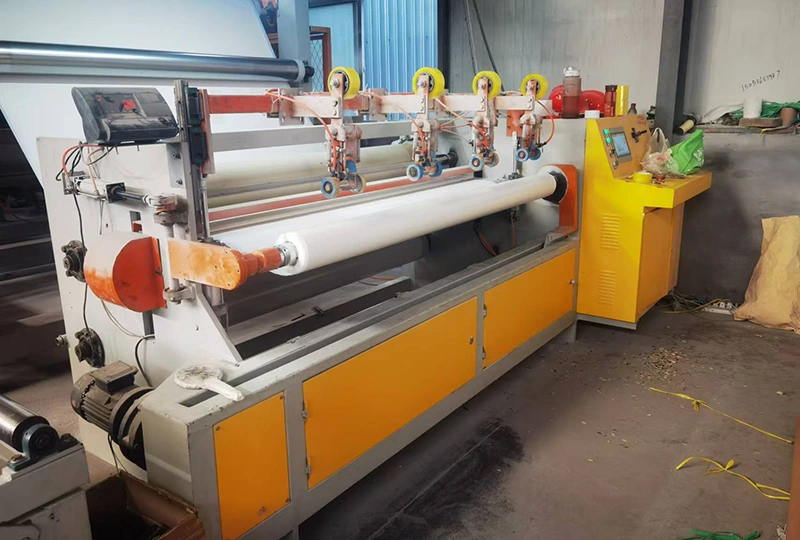
Quality Assurance: From "Meeting Standards" to "Exceeding Standards"
Product quality is the first mission of any production line. Modern polymer waterproof membrane production lines must build a quality closed loop across formulation, forming, and inspection.
Precise Compounding and Gentle Extrusion – Protecting Material Performance from the Start
Waterproof membrane formulations often contain ingredients sensitive to processing conditions, such as flame retardants and antioxidants. A co-rotating parallel twin-screw extruder achieves high output (up to 500–5000 kg/h) while gently plasticizing, mixing, and homogenizing the material, preventing degradation caused by excessive shear. For PVC and other chlorine-containing powdery raw materials with inherent instability, specially designed screw configurations ensure uniform plasticization.
Multi-Layer Composite Structure – Delivering Core Functionality
High-quality waterproof membranes are typically multi-layer composite films with built-in reinforcement layers (e.g., TPO membranes with a polyester scrim reinforcement, optionally surfaced with fabric fibers or aluminum foil). The production line integrates solid roll calendering composite technology, which securely bonds the reinforcement layer to the polymer layers, achieving wind uplift resistance comparable to imported products.
End-to-End Inline Inspection – Preventing Defects from Leaving the Factory
Traditional sampling inspection is like opening a mystery box. In contrast, smart production lines are equipped with inline thickness gauges (laser-based inspection capable of detecting deviations as small as 0.2mm), high-precision weighing modules, and defect detection systems, enabling 100% full inspection of all products. Any thickness deviation or surface imperfection is identified in real time and automatically segregated, ensuring 100% conformity of outgoing products.
Efficiency Engine: Intelligence-Driven Capacity Leap
High efficiency is a prerequisite for controlling long-term costs. Intelligence is the core pathway to elevating overall line productivity.
Automated Closed-Loop Control – Minimizing Human Intervention
Through PLC touchscreen interfaces and central control systems, the production line automates the entire workflow—from raw material metering, temperature ramp-up control, mixing and modification, to grinding and batching. In one advanced smart factory, for example, a bituminous membrane line previously required over a dozen operators; now only five are needed for monitoring, with per-capita annual output reaching RMB 3.66 million. Polymer waterproof membrane lines can similarly be equipped with automatic edge correction, roll-changing without line stoppage, and automatic winding and unloading, dramatically improving continuous operation capability.
Data-Driven Management – Making the Production Line "Transparent"
With 5G gateways and IoT sensors, hundreds of parameters—including equipment operating status, energy consumption, and quality inspection results—are aggregated in real time on central control dashboards, giving management complete visibility into "what the line is doing and where each order stands." This transparent management approach boosts intelligent production scheduling accuracy to 99% and increases overall efficiency by over 40%.
Cost Controllability: A Full Lifecycle Perspective on Total Cost
Controlling long-term total cost is realized across three dimensions: labor savings, material savings, and energy savings.
| Cost Dimension | Control Measures | Expected Outcome |
|---|---|---|
| Labor Cost | Highly automated line, equipped with robotic automatic bag opening and palletizing | Significant headcount reduction and streamlined management |
| Material Waste | Precision metering systems and intelligent production scheduling to avoid over-batching and reject generation | Material loss rate reduced by over 1% |
| Energy Consumption | High-efficiency extruders with intelligent temperature control to lower power consumption per unit output | Overall energy consumption significantly lower than conventional equipment |
Additionally, the line must offer flexible customizability to accommodate various raw materials (PE, EVA, TPO, PVC, etc.) and produce membranes in different widths (up to 4000mm) and thicknesses (0.5–3mm)—one investment, multiple product applications, effectively amortizing long-term total costs.
Long-Term Reliability: Backed by Established Brands and Comprehensive Service
Sustained stable operation relies on robust equipment fundamentals and dependable after-sales support.
-
Proven Technology Foundation: Choose a manufacturer with years of extrusion expertise and hundreds of national patents, whose equipment designs have been validated through extensive market deployment.
-
Turnkey Engineering Capability: A single supplier provides the full solution—from material handling and extrusion forming to winding and packaging. One single point of contact eliminates compatibility risks associated with multi-vendor integration.
-
Rapid-Response Service: The after-sales team should deliver installation and commissioning, operator training, spare parts supply, and remote technical support, ensuring that line faults are resolved quickly and downtime is minimized.
Previous:No News
Send Inquiry



X
We use cookies to offer you a better browsing experience, analyze site traffic and personalize content. By using this site, you agree to our use of cookies.
Privacy Policy