




Butyl Rubber Coating Production Line
Butyl Rubber Coating Production Line represents a pinnacle of industrial engineering designed for the efficient, high-volume manufacturing of butyl rubber-based waterproofing, sealing, and adhesive coatings. These specialized coatings are essential in demanding sectors such as construction, automotive, and industrial fabrication due to their exceptional impermeability to gases and water vapor, excellent weathering resistance, and durable adhesive properties. For manufacturers seeking to enter or dominate this high-value market, investing in a fully automated, precision-engineered production line is not just an option; it's a critical determinant of product quality, production capacity, and long-term profitability. Haiming Machinery, with decades of dedicated expertise in chemical processing and coating equipment, designs and delivers turnkey production solutions that integrate advanced technology with robust engineering to ensure our clients achieve unmatched consistency, efficiency, and scalability in their butyl rubber coating output.
The core value of a Haiming Machinery butyl rubber coating production line lies in its holistic, process-optimized design. We move beyond simply supplying individual machines to providing a seamlessly integrated system where each component—from raw material feeding and polymer melting to precise compounding, homogeneous mixing, degassing, and final coating application onto carrier materials—is engineered to work in perfect synchrony. This systems approach minimizes manual intervention, reduces batch-to-batch variation, and maximizes throughput, enabling producers to meet strict international quality standards while maintaining a lean operational footprint. Our lines are built with versatility in mind, capable of handling various formulations, including standard butyl, halogenated butyl, and polymer-modified blends, to produce a wide range of end products from self-adhesive waterproofing membranes and tapes to liquid-applied coatings and sealants.
For a professional audience, the technical specifications and performance parameters of the production line are of paramount importance. Below is a detailed breakdown presented in both list and tabular format to clearly articulate the capabilities and configuration of a standard Haiming Machinery butyl rubber coating line.
**Key System Components & Technical Specifications:**
1. **Precision Raw Material Handling System:**
* **Solvent Tanks:** Constructed from 304 or 316L stainless steel with insulated jackets, equipped with agitators, level sensors, and temperature control (±1°C). Capacities range from 5,000 to 50,000 liters.
* **Polymer & Filler Feeding:** Automated hoppers with load cells for precise gravimetric dosing of raw butyl rubber, resins, and fillers like calcium carbonate or carbon black. Dosing accuracy is within ±0.5%.
* **Liquid Additive Metering:** High-precision gear or mass flow meters for controlled injection of plasticizers, oils, and adhesion promoters.
2. **High-Shear Mixing & Compounding Reactor:**
* **Design:** Jacketed, sigma-blade or high-shear disperser mixer with a "Z" or "Banbury" style configuration for intensive kneading.
* **Capacity:** Working volumes from 500L to 5,000L per batch.
* **Heating/Cooling:** Thermal oil or steam heating system with water cooling circuits. Temperature control range: Ambient to 200°C.
* **Drive Power:** High-torque, variable frequency drive (VFD) motors from 75 kW to 500 kW, tailored to batch viscosity and cycle time requirements.
* **Vacuum System:** Integrated for efficient degassing (devolatilization) to remove entrapped air and moisture, achieving vacuum levels below -0.095 MPa.
3. **Continuous Coating & Laminating Section:**
* **Unwinding Stations:** Dual-position unwind stands with automatic splicing for non-stop operation of carrier materials (e.g., non-woven fabric, foil, film).
* **Pre-Coating Treatment:** Corona treater or primer application station to enhance coating adhesion.
* **Coating Head:** Precision slot-die, knife-over-roll, or reverse-roll coating head, engineered for uniform application weight control across the web width.
* **Web Width & Speed:** Standard widths from 1,200 mm to 3,200 mm. Linear speeds adjustable from 5 to 50 meters per minute.
* **Drying/Curing Ovens:** Multi-zone, hot-air impingement or infrared ovens with precise temperature profiling (typically 80°C - 180°C) for solvent evaporation and/or cross-linking.
* **Laminating & Embossing:** Optional stations for applying release liners or creating surface textures.
* **Final Wind-Up:** Center-surface turret winder with tension control to produce large, uniform rolls (up to 3,000 mm in diameter).
4. **Centralized Control System (CCS):**
* **Hardware:** Industrial PC with redundant PLC (Programmable Logic Controller) and touch-screen HMIs (Human-Machine Interfaces) at key stations.
* **Software:** Proprietary SCADA (Supervisory Control and Data Acquisition) system for recipe management, real-time process monitoring, data logging, and production reporting.
* **Accuracy:** Ensures repeatable control of all critical parameters: temperature, speed, tension, coating weight, and mix times.
**Comprehensive Performance & Output Table:**
| Parameter Category | Specification Details | Performance Metric / Range |
| :--- | :--- | :--- |
| **Overall Line Output** | Maximum Production Capacity | 500 - 5,000 kg per hour (highly dependent on formulation and coating weight) |
| **Product Specifications** | Coating Width | 1,000 mm to 3,000 mm (customizable) |
| | Coating Thickness (Wet) | 0.2 mm to 5.0 mm |
| | Coating Weight (Dry) | 100 g/m² to 3,000 g/m² |
| | Application Accuracy | ± 2.5% across web width |
| **Process Control** | Mixing Temperature Control | ± 2.0 °C |
| | Oven Temperature Control | ± 1.5 °C per zone |
| | Web Tension Control | Precision closed-loop control, adjustable |
| **Utilities Consumption** | Electrical Power | 150 kW - 1,200 kW (total connected load) |
| | Thermal Energy (Steam/Oil) | Varies with output; high-efficiency heat recovery systems standard |
| | Compressed Air | Clean, dry air at 6-8 bar, approx. 10 Nm³/min |
| **Footprint & Installation** | Typical Floor Space Required | Approximately 40m (L) x 12m (W) x 8m (H) for a mid-range line |
| | Installation & Commissioning | Supervised by Haiming Machinery engineers (typically 8-12 weeks) |
**Butyl Rubber Coating Production Line – Frequently Asked Questions (FAQ)**
**Q: What are the primary advantages of a fully automated production line over batch processing for butyl rubber coatings?**
A: A fully integrated, automated line offers transformative advantages: It enables true continuous production, drastically reducing cycle times and labor costs. Automation ensures exceptional batch-to-batch consistency in viscosity, coating weight, and final product performance. It improves safety by minimizing operator exposure to raw materials and solvents. Furthermore, it allows for precise, real-time control over every process parameter, leading to superior product quality, less material waste, and higher overall equipment effectiveness (OEE).
**Q: How does Haiming Machinery ensure the homogeneity and stability of the butyl rubber compound during production?**
A: Homogeneity is critical. Our lines achieve this through a multi-stage process. First, precision gravimetric dosing of all components eliminates formulation errors. The high-shear mixing reactor is engineered with optimized blade geometry and power to thoroughly knead the viscous butyl base with fillers, tackifiers, and additives, breaking down agglomerates. The subsequent degassing stage under high vacuum removes air bubbles that could cause defects. Finally, the compound is often held in a temperature-controlled holding tank with slow agitation before coating to ensure stability and supply a consistent feed to the coating head.
**Q: Can the production line handle different carrier materials and coating formulations?**
A: Absolutely. Versatility is a core design principle at Haiming Machinery. The line can be configured to process various carriers including polyester non-wovens, woven glass fabric, aluminum foil, HDPE film, and silicone release liners. The unwind, tension control, and treaters are adjustable for different material strengths. Regarding formulation, the PLC-based control system stores multiple recipes. Switching between standard butyl, halogenated butyl for improved heat resistance, or polymer-modified blends (e.g., with SBS or EPDM) primarily involves calling up a new recipe, with some mechanical adjustments to the coating head for different rheologies.
**Q: What are the key factors in achieving perfect coating weight and uniformity?**
A: Perfect coating application relies on several interlinked factors: The precise rheology (viscosity and flow characteristics) of the compounded material, maintained by strict temperature control. The engineering of the coating head (slot-die, knife-over-roll, etc.), which must be meticulously machined and aligned. Sophisticated web tension control throughout the line to prevent stretching or wrinkling of the carrier. Precise control of the line speed and the gap settings on the coating head. Haiming Machinery integrates all these elements, often including automatic gauge scanning for closed-loop control of coating weight.
**Q: How energy-efficient are modern butyl rubber coating lines, and what solvent recovery options exist?**
A: Modern lines from Haiming Machinery prioritize energy efficiency. Our ovens feature high-efficiency burners, optimized air flow design, and heat recovery systems that capture waste heat to pre-heat incoming air. For solvent-based formulations, we strongly recommend and can integrate solvent recovery systems (typically condensation or activated carbon adsorption). These systems capture evaporated solvents from the drying ovens, condense them, and purify them for reuse. This drastically reduces VOC emissions, complies with environmental regulations, and lowers raw material costs by recovering valuable solvents.
**Q: What level of technical support and training does Haiming Machinery provide with the installation?**
A: Our support is comprehensive and turnkey. It begins with detailed factory acceptance testing (FAT) at our facility. Upon installation at your site, a team of our experienced engineers supervises the mechanical assembly, electrical connection, and system calibration. We then conduct rigorous commissioning runs to fine-tune the line for your specific materials. Most importantly, we provide extensive hands-on operational and maintenance training for your technical staff, covering normal operation, troubleshooting, recipe management, and preventive maintenance schedules. We also provide detailed manuals and offer ongoing remote and on-site support services.
Products
- Waterproof membrane production line
- TPO Waterproof Membrane Production Line
- DPC Waterproof Membrane Production Line
- HDPE Self-Adhesive Film Production Line
- PVC Waterproof Membrane Production Line
- Bitumen Waterproof Membrane Production Line
- TPU Color Steel Tile Self-Adhesive Production Line
- Butyl Rubber Coating Production Line
- Geomembrane Production Line
- Fiberglass Base Fabric Production Line
- Grade 1 Waterproof Membrane
- Asphalt Waterproofing Membrane Equipment
- Polymer waterproof membrane production line
- Non Woven Production Line Equipment
- Butyl Rubber Waterproofing Membrane Production Line
- Oil Refining Equipment
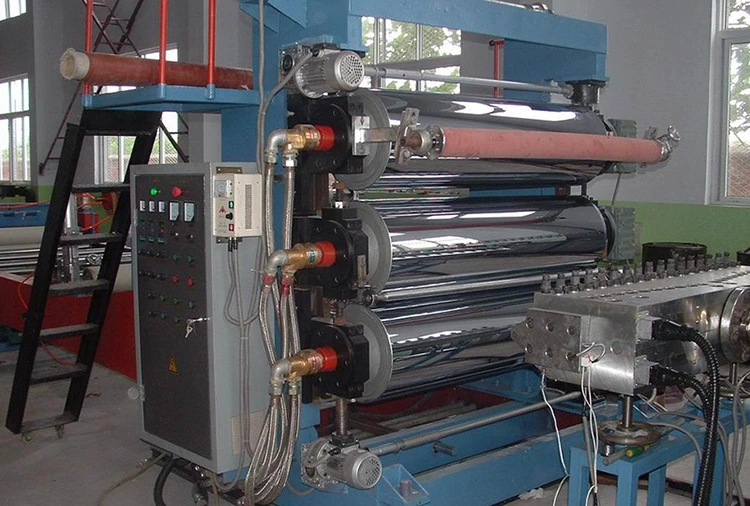
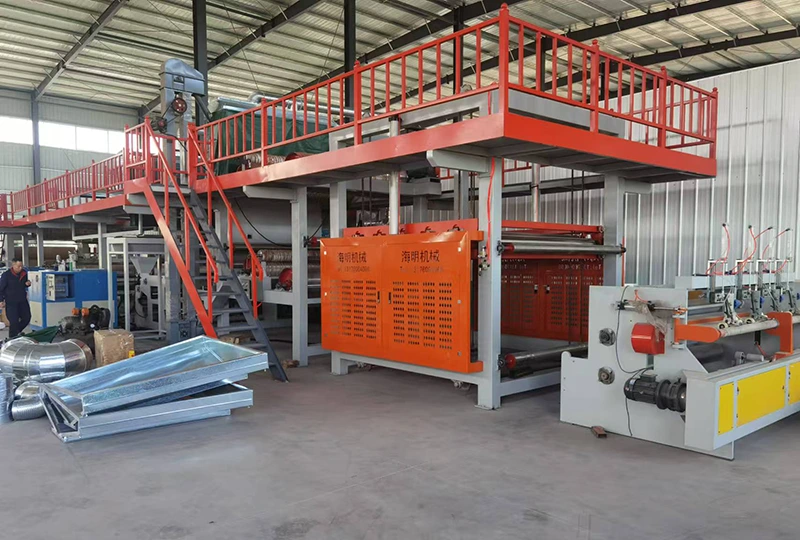

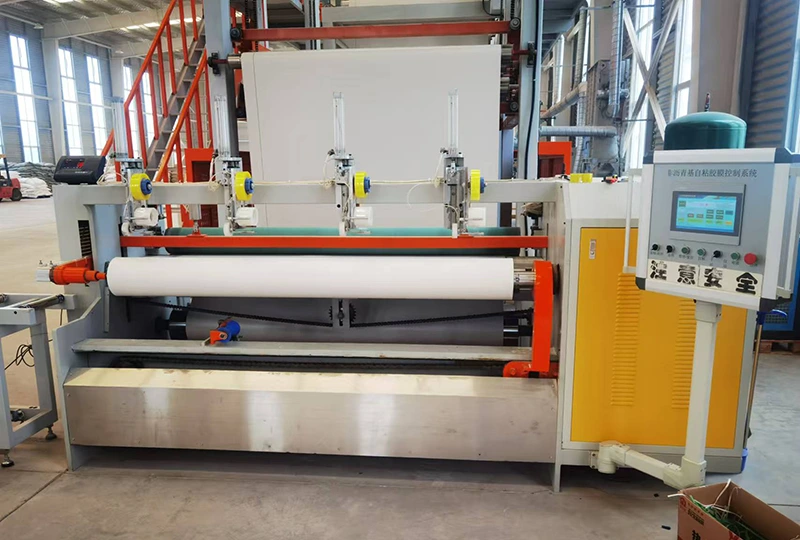
- View as
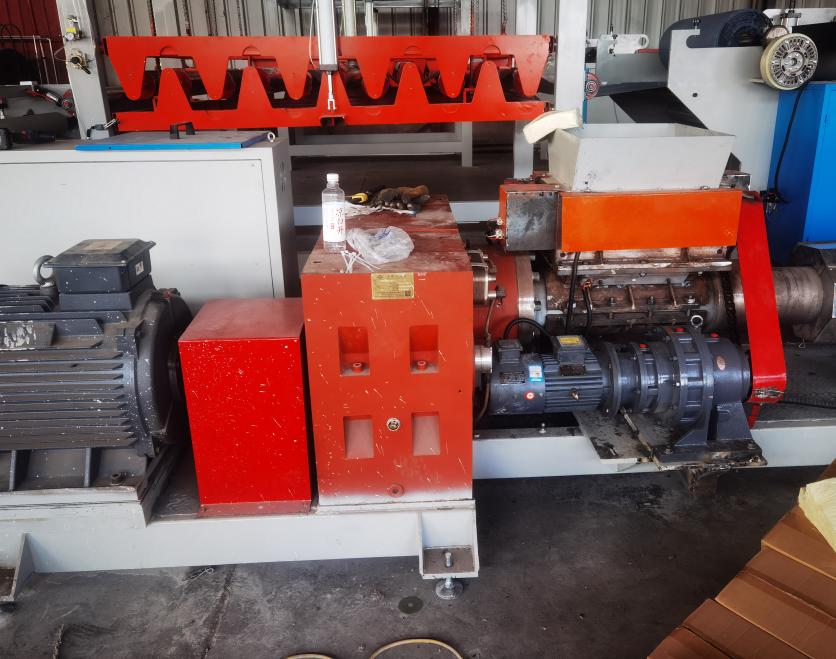
Butyl rubber waterproof membrane production line
The Butyl Rubber Waterproof Membrane Production Line by Haiming Machinery is a specialized industrial solution designed for the continuous manufacturing of high-quality synthetic rubber sealing tapes. By integrating advanced mixing, extrusion, and lamination technologies, this production line transforms raw butyl rubber, resins, and fillers into durable waterproofing products used extensively in modern construction and infrastructure
View DetailsSend Inquiry
We are looking forward to your buy Butyl Rubber Coating Production Line from our company made in China - Haiming Machinery. Our factory is a Butyl Rubber Coating Production Line manufacturer and supplier in China. You are welcome to buy our high quality products.



X
We use cookies to offer you a better browsing experience, analyze site traffic and personalize content. By using this site, you agree to our use of cookies.
Privacy Policy