




Geomembrane Production Line
Geomembrane Production Line: Engineering Excellence for Impermeable Solutions
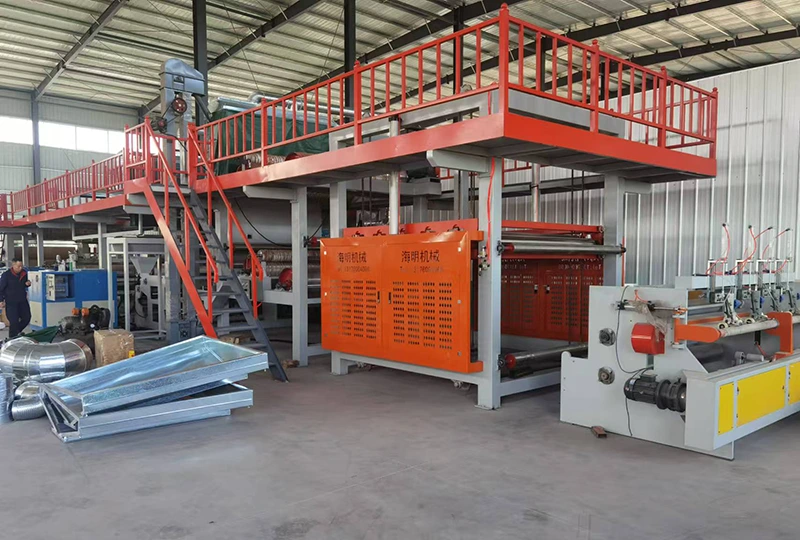
In the world of civil engineering, environmental protection, and water resource management, the integrity of containment systems is paramount. Geomembrane production lines represent the backbone of manufacturing these critical synthetic barriers. At Haiming Machinery, we have dedicated decades to refining and advancing the technology behind these sophisticated production systems. A state-of-the-art geomembrane production line is not merely a collection of machines; it is a meticulously integrated process designed to produce high-performance, durable, and consistent geomembrane sheets essential for landfills, mining, aquaculture, and water conservation projects globally.
The core objective of such a production line is to transform high-quality polymer resins—primarily HDPE, LDPE, LLDPE, or PVC—into uniform, defect-free sheets with specific mechanical and hydraulic properties. The process involves precise extrusion, calendering or casting, controlled cooling, and accurate winding. Every component in the Haiming Machinery production line, from the gravimetric dosing system to the high-torque winder, is engineered for reliability, efficiency, and unparalleled output quality, ensuring our clients produce geomembranes that meet and exceed international standards like GRI-GM13, ASTM, and ISO.
Core Components & Technical Parameters of a Modern Geomembrane Line
A fully integrated geomembrane production line by Haiming Machinery comprises several key stations, each critical to the final product's performance. Understanding these components and their specifications is crucial for making an informed investment.
- Extrusion System: The heart of the line. It includes a high-output, energy-efficient single or twin-screw extruder equipped with a specially designed flat die. The die width determines the maximum production width of the geomembrane.
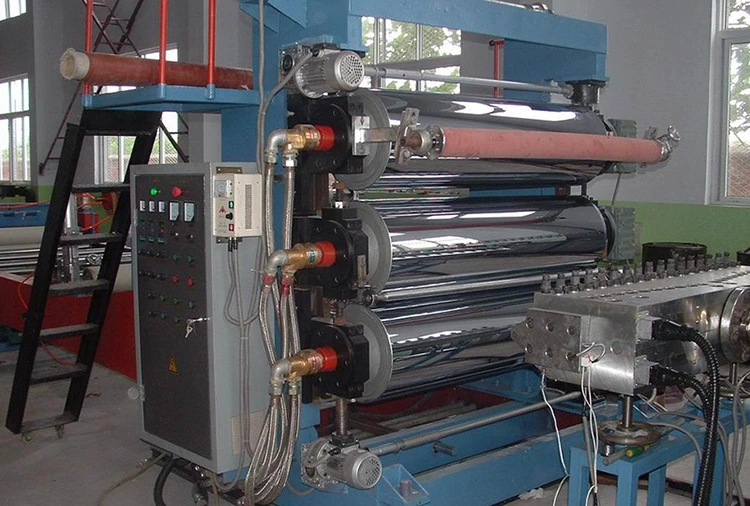
- Calendering & Cooling Unit: This section features precision-heated rollers that calibrate the molten polymer to the exact thickness. It is immediately followed by a multi-zone cooling system to solidify the sheet without inducing stress.
- Thickness Gauge & Control: An automatic, non-contact beta-ray or ultrasonic gauge continuously scans the sheet width. It provides real-time feedback to the die bolt adjustment system, ensuring thickness tolerance within ±3%.
- Surface Treatment (Optional): For applications requiring enhanced friction, a surface texturing unit (either spray-on or in-line co-extrusion) can be integrated to create a rough surface on one or both sides.
- Trimming & Edge Control: High-speed edge trimmers ensure clean, straight sides. The trimmed material is automatically recycled back into the extruder, maximizing material efficiency.
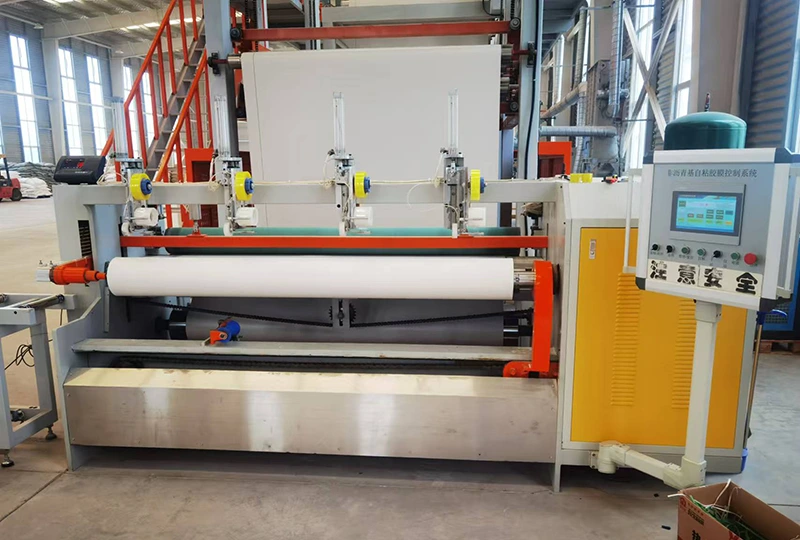
- Winding Machine: A fully automatic, dual-position turret winder with tension control ensures consistent, tight rolls suitable for shipping and handling. It features automatic cut-and-transfer for uninterrupted production.
Detailed Technical Specification Table
| Parameter | Specification Range | Notes |
|---|---|---|
| Production Width | 1m to 8m | Custom die designs available for specific project needs. |
| Thickness Range | 0.5mm to 3.0mm | Precise control for both smooth and textured geomembranes. |
| Output Capacity | 300 to 1500 kg/h | Depends on raw material, thickness, and line configuration. |
| Extruder Power | 90 kW to 450 kW | Energy-efficient DC or AC variable frequency drives. |
| Thickness Control Accuracy | ±0.02mm to ±0.05mm | Guaranteed by full-automatic scanning gauge and闭环 control. |
| Winding Roll Diameter | Up to 2.8 meters (max.) | Reduces splice frequency for end-users. |
| Line Control System | PLC with HMI Touchscreen | Centralized monitoring, data logging, and fault diagnosis. |
Critical Production Parameters Influencing Geomembrane Quality
Beyond the machinery specifications, the operational parameters set during production directly define the geomembrane's long-term performance. Haiming Machinery's advanced control systems provide operators with precise command over these variables.
- Melt Temperature Profile: Precisely controlled heating zones along the extruder barrel and die ensure optimal polymer melting and flow, preventing degradation and ensuring homogeneity.
- Line Speed: Synchronized across all sections from extrusion to winding. It is balanced with cooling efficiency to determine final crystallinity and mechanical properties.
- Calender Roll Temperature & Pressure: These settings are crucial for achieving the target thickness and surface finish. Even minor deviations can affect tensile strength and elongation.
- Cooling Gradient: A controlled, staged cooling process prevents rapid quenching, which can lead to internal stress, warping, or reduced environmental stress crack resistance (ESCR).
- Winding Tension: Consistent, programmable tension is vital to prevent stretching or relaxing the sheet, ensuring rolls are stable and easy to deploy on-site.
Frequently Asked Questions (FAQ) About Geomembrane Production Lines
General & Technical Questions
What are the key factors to consider when choosing a geomembrane production line?
The primary considerations are: 1) Target Product Specifications: Required width, thickness range, and material type (HDPE, LLDPE, etc.). 2) Desired Output: Kilograms per hour, which dictates the extruder size and cooling capacity. 3) Level of Automation: From basic manual control to fully automated lines with automatic die adjustment and winding. 4) Compliance Needs: Ensuring the line can produce geomembranes that meet relevant international standards, which requires precision in thickness control and cooling. 5) After-sales Support: Access to technical service, spare parts, and process know-how from the supplier, which is a cornerstone of Haiming Machinery's customer commitment.
What is the difference between a calendering line and a casting line for geomembrane production?
Calendering lines pull the molten polymer through a series of precision-heated rollers (calenders) to press it into a sheet of specific thickness. This method is dominant for HDPE and offers excellent thickness control and surface uniformity, ideal for thick geomembranes. Casting lines involve extruding the polymer melt onto a large, temperature-controlled casting drum or belt, where it cools and solidifies. Casting is often used for thinner, flexible materials like LDPE or PVC. Haiming Machinery provides robust solutions for both technologies, advising clients on the optimal process for their target market.
How important is the automatic thickness control system?
It is absolutely critical. Consistent thickness is the most fundamental quality parameter for a geomembrane, directly impacting its hydraulic performance (permeability) and mechanical strength (puncture resistance). A manual system cannot achieve the uniformity required for certification. An automated system with a scanning gauge continuously measures the sheet and makes micro-adjustments to the die lips hundreds of times per minute, guaranteeing that every meter of the roll meets the specified tolerance, minimizes raw material waste, and ensures product consistency.
Operation & Raw Material Questions
What raw materials can be processed on a Haiming Machinery production line?
Our lines are designed to handle a wide range of polyolefin resins. This includes: Virgin High-Density Polyethylene (HDPE) resins, which are most common for containment applications; Linear Low-Density Polyethylene (LLDPE) for more flexible liners; and Polyvinyl Chloride (PVC). We also engineer our systems to handle a certain percentage of recycled content (post-industrial) when blended with virgin resin, supporting sustainable manufacturing practices. The extruder screw design, barrel temperatures, and downstream equipment are configured based on the primary polymer's processing characteristics.
How is textured geomembrane produced on an extrusion line?
Textured (or structured) geomembrane is produced to increase surface friction for slope stability. There are two primary methods integrated into a production line: 1) In-line Co-extrusion: A secondary extruder adds a layer of polymer that is blown or sprayed onto the smooth sheet surface before final cooling, creating a rough texture. 2) Post-Formation Texturing: The smooth, cooled sheet passes through a set of engraved rollers under heat and pressure, which embosses a pattern onto the surface. Haiming Machinery lines can be equipped with either system, with the co-extrusion method being more common for high-quality, integrally bonded texture.
What is the typical power consumption and floor space requirement for a standard line?
Power consumption is primarily driven by the extruder drives, heater bands, and cooling systems. A medium-capacity line producing 2m wide, 1.5mm thick HDPE geomembrane may have a total connected load of 400-600 kW. Actual consumption varies with output. Floor space is linear. A complete line, including raw material silos, extruder, cooling train, winder, and control cabin, typically requires a length of 40 to 70 meters and a width of 8 to 12 meters (considering operational space). Haiming Machinery provides detailed plant layout assistance during the project planning phase.
Maintenance & Support
What kind of maintenance does a geomembrane production line require?
Regular preventive maintenance is essential for longevity and consistent output. Key tasks include: Daily checks of heater and thermocouple function; Weekly inspection of gearboxes and bearing lubrication; Periodic cleaning of the die lips to prevent carbon buildup; Calibration of the thickness gauge every 3-6 months; and Scheduled overhaul of the extruder screw and barrel based on running hours. Haiming Machinery provides comprehensive maintenance manuals, training for client technicians, and readily available spare parts for all critical components to minimize downtime.
Does Haiming Machinery provide installation and training services?
Yes, absolutely. We offer a complete turnkey service package. This includes: Detailed foundation drawings; Dispatch of experienced engineers for supervision of mechanical installation and electrical connection; Commissioning of the entire line and fine-tuning for optimal production; Comprehensive training for client operators, maintenance staff, and production managers on both machine operation and the critical process parameters affecting geomembrane quality. Our support ensures a smooth ramp-up to stable, profitable production.
Products
- Waterproof membrane production line
- TPO Waterproof Membrane Production Line
- DPC Waterproof Membrane Production Line
- HDPE Self-Adhesive Film Production Line
- PVC Waterproof Membrane Production Line
- Bitumen Waterproof Membrane Production Line
- TPU Color Steel Tile Self-Adhesive Production Line
- Butyl Rubber Coating Production Line
- Geomembrane Production Line
- Fiberglass Base Fabric Production Line
- Grade 1 Waterproof Membrane
- Asphalt Waterproofing Membrane Equipment
- Polymer waterproof membrane production line
- Non Woven Production Line Equipment
- Butyl Rubber Waterproofing Membrane Production Line
- Oil Refining Equipment

- View as
EVA waterproof membrane production line
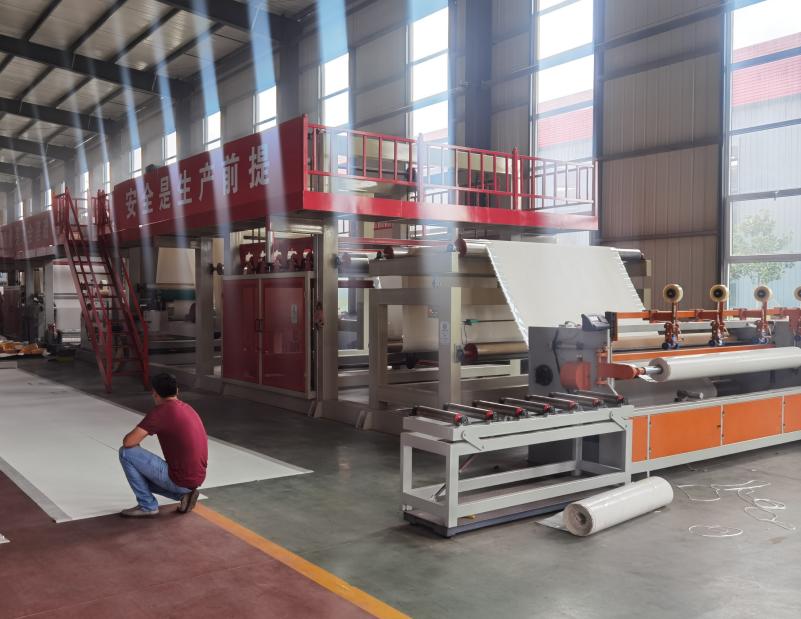
Haiming Machinery EVA waterproof membrane production line is an integrated, automated polymer processing equipment. It uses extrusion molding to turn PE resin into impermeable geomembrane, with blow molding and flat extrusion casting as mainstream processes. This production line is widely used in water conservancy, environmental protection, municipal and other anti-seepage engineering projects.
View DetailsSend Inquiry
We are looking forward to your buy Geomembrane Production Line from our company made in China - Haiming Machinery. Our factory is a Geomembrane Production Line manufacturer and supplier in China. You are welcome to buy our high quality products.



X
We use cookies to offer you a better browsing experience, analyze site traffic and personalize content. By using this site, you agree to our use of cookies.
Privacy Policy